1. Product Overview
Water Soluble Tetrandrine (CAS: 518-34-3) is a modified, highly bioavailable form of the bisbenzylisoquinoline alkaloid originally isolated from the dried root of Stephania tetrandra S. Moore (Fen Fang Ji), a plant deeply rooted in traditional Chinese medicine. While native Tetrandrine is poorly soluble in water, our water-soluble formulation dramatically enhances its solubility, dissolution rate, and oral bioavailability, enabling broader pharmaceutical and cosmeceutical applications.
Tetrandrine is one of the most extensively studied natural calcium channel blockers. Its primary mechanism involves reversible inhibition of L-type and T-type voltage-gated calcium channels, leading to modulation of intracellular Ca²⁺ homeostasis. This calcium-modulating activity underpins its potent anti-inflammatory (NF-κB and COX-2 pathway suppression), anti-fibrotic (TGF-β1/Smad pathway inhibition), immunomodulatory, and anticancer properties. Clinically, Tetrandrine has been approved in China for the treatment of silicosis and has demonstrated efficacy in managing rheumatoid arthritis, pulmonary fibrosis, liver fibrosis, and hepatocellular carcinoma.
Shaanxi TAIMA Bioengineering Co., Ltd. supplies high-purity Water Soluble Tetrandrine (≥98% HPLC) manufactured under ISO 9001 and ISO 14001 certified facilities, with comprehensive documentation including COA, MSDS, and TDS for every batch.
2. Physicochemical Properties
| Product Name | Water Soluble Tetrandrine (INCI: Tetrandrine) |
| CAS Number | 518-34-3 |
| Molecular Formula | C₃₈H₄₂N₂O₆ |
| Molecular Weight | 622.75 g/mol |
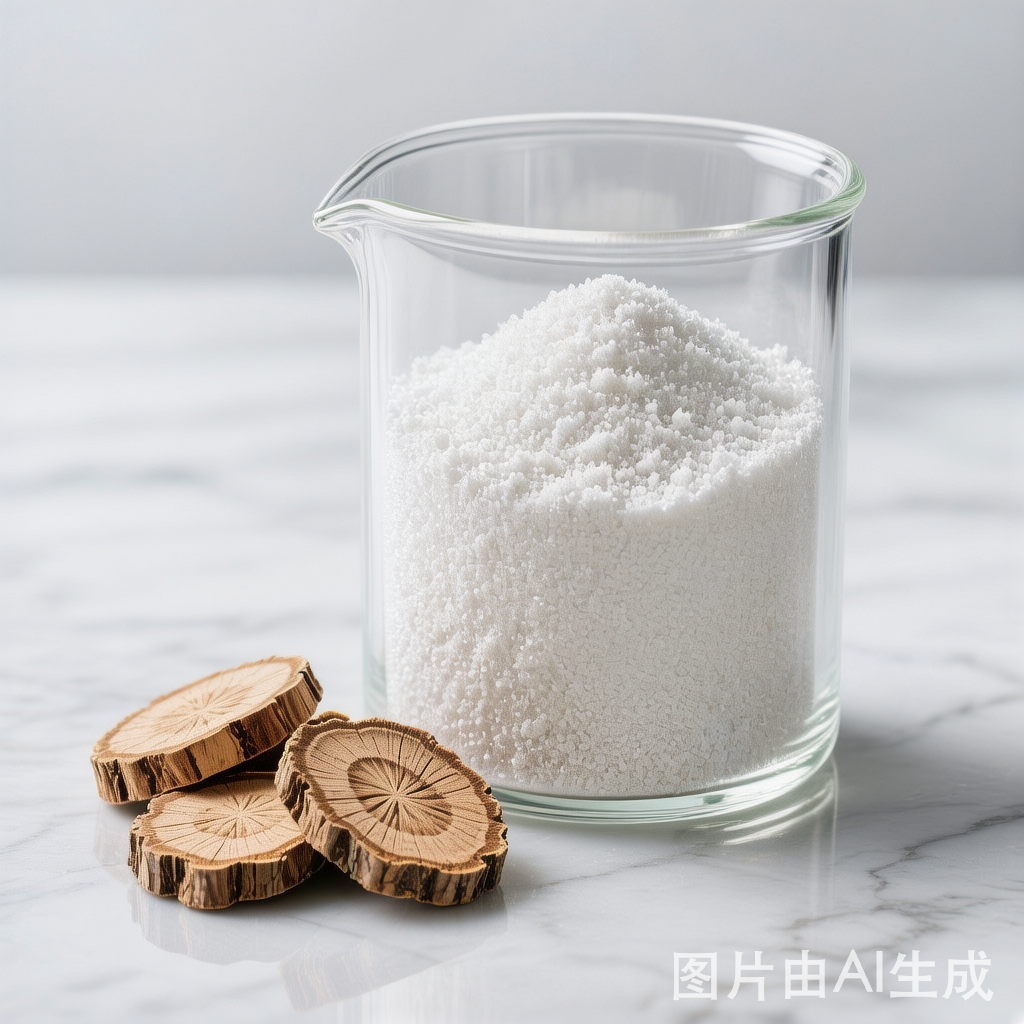
| Appearance | White crystalline powder |
| Odor | Odorless |
| Taste | Light sweet |
| Melting Point | 216–221°C |
| Source Plant | Stephania tetrandra S. Moore (Fen Fang Ji / Han Fang Ji) |
| Specifications | ≥98% by HPLC |
| Classification | Bisbenzylisoquinoline alkaloid |
| Solubility (enhanced) | Highly water-soluble (modified formulation) |
| Acid Insoluble Test | Clear and transparent solution |
3. Quality Specifications
| Test Item | Specification | Typical Result |
| Identification | Positive reaction (2 tests) | Complies |
| Assay (HPLC) | ≥ 98% | 98.7% |
| Total Other Alkaloids | ≤ 8% | ≤ 4% |
| Loss on Drying | ≤ 1.0% | 0.13% |
| Residue on Ignition | ≤ 1.0% | 0.06% |
| Heavy Metals | ≤ 10 ppm | 0.40 ppm |
| Benzene Residue | ≤ 0.0002% | Not Detected |
| Absorption Coefficient | 108–114 | 110 |
4. Key Benefits & Mechanisms
4.1 Calcium Channel Blockade
Tetrandrine’s signature mechanism is reversible inhibition of L-type and T-type voltage-gated calcium channels (VGCCs). By blocking extracellular Ca²⁺ influx through these channels, it modulates intracellular calcium homeostasis, which is the upstream trigger for multiple downstream signaling pathways. It also inhibits NAADP-mediated lysosomal Ca²⁺ release, further reinforcing its calcium-modulating effects.
Anti-Inflammatory: Potently inhibits NF-κB nuclear translocation and COX-2 expression. Suppresses multiple pro-inflammatory cytokines: IL-1β, IL-6, TNF-α, and ICAM-1. Reduces inflammatory cell infiltration, comparable efficacy to dexamethasone in some models. Clinically effective in rheumatoid arthritis, conjunctival inflammation, and systemic lupus erythematosus.
Anti-Fibrotic: Inhibits TGF-β1/Smad2/3 signaling pathway, the master regulator of fibrosis. Suppresses fibroblast-to-myofibroblast differentiation and reduces collagen deposition. Clinically approved in China for silicosis (pulmonary fibrosis) treatment. Effective in liver fibrosis, renal fibrosis, and post-surgical scar prevention. Prevents excess scarring after trabeculectomy and in severe conjunctival inflammation.
Immunomodulatory: Modulates T-cell differentiation and function by regulating calcium signaling. Reduces Th1/Th17 responses while promoting Treg activity. Inhibits NLRP3 inflammasome activation via calcium blockade. Useful for autoimmune and chronic inflammatory conditions.
Anticancer Activity: Induces apoptosis in multiple cancer cell lines (hepatocellular carcinoma, lung cancer, leukemia, glioma) via calcium-dependent mitochondrial pathways. Reverses multidrug resistance by inhibiting P-glycoprotein (P-gp) efflux pump. Synergizes with conventional chemotherapeutics. Inhibits tumor angiogenesis and metastasis through multiple targets.
Hepatoprotection: Protects against chemical-induced liver injury (CCl₄, acetaminophen). Reduces hepatic stellate cell activation and liver fibrosis. Demonstrates clinical activity against hepatocellular carcinoma. Lowers liver enzyme markers (ALT, AST) in chronic liver disease.
Cardiovascular Protection: Antihypertensive effect via calcium channel blockade in vascular smooth muscle. Cardioprotective in ischemia-reperfusion injury models. Antiarrhythmic properties through cardiac ion channel modulation. Reduces atherosclerosis progression by inhibiting vascular smooth muscle proliferation.
Antiviral Activity: Demonstrates broad-spectrum antiviral activity including anti-SARS-CoV-2 in vitro. Inhibits viral entry and replication via endolysosomal calcium modulation. Studied for dengue virus, Ebola virus, and herpes simplex virus inhibition.
Cosmeceutical Benefits: Anti-aging: Reduces MMP activity and preserves collagen/elastin. Anti-inflammatory: Calms skin redness, irritation, and sensitivity. UV protection: Reduces UV-induced oxidative damage and DNA injury. Whitening/brightening: Inhibits tyrosinase activity via calcium modulation.
5. Applications
5.1 Pharmaceutical
- Pulmonary fibrosis and silicosis treatment (clinically approved in China)
- Rheumatoid arthritis — anti-inflammatory and immunomodulatory therapy
- Liver fibrosis and hepatocellular carcinoma — hepatoprotection and anticancer
- Post-surgical scar prevention — especially ophthalmic (trabeculectomy)
- Chemotherapy adjuvant — reversal of multidrug resistance via P-gp inhibition
- Cardiovascular diseases — hypertension, arrhythmia, atherosclerosis
- Autoimmune conditions — systemic lupus erythematosus, psoriasis
5.2 Cosmeceutical & Skincare
| Application | Product Types | Dosage |
| Anti-Aging | Anti-aging serums, firming creams | 0.1% – 1.0% |
| Soothing & Calming | Sensitive skin serums, redness balms | 0.1% – 0.5% |
| Brightening | Whitening serums, dark spot correctors | 0.1% – 0.5% |
| Sun Protection | After-sun repair, UV defense creams | 0.05% – 0.3% |
| Eye Care | Anti-puffiness eye serums, eye creams | 0.05% – 0.3% |
5.3 Food & Nutraceutical
- Dietary supplement for immune modulation and anti-inflammatory support
- Functional food additive for cardiovascular health maintenance
- Nutraceutical formulations targeting chronic inflammation and healthy aging
6. TAIMA Competitive Advantages
Enhanced Solubility: Water-soluble formulation dramatically improves dissolution rate and oral bioavailability compared to native Tetrandrine. Ideal for pharmaceutical and nutraceutical formulations.
High Purity: ≥98% HPLC-grade with batch-to-batch consistency. Total alkaloid impurities ≤4%.
Natural Source: Extracted from sustainably sourced Stephania tetrandra. Non-GMO, no animal-derived materials.
Complete Documentation: COA, MSDS, TDS, and stability data provided with every shipment.
Certified Manufacturing: ISO 9001:2015, ISO 14001:2015, KOSHER, HALAL certified facilities.
Global Supply: Serving 50+ countries worldwide. Flexible packaging from 100 g samples to 25 kg drums.
Technical Support: Solubility optimization, formulation guidance, compatibility testing, and stability studies.
7. Packaging & Storage
| Standard Packaging | 25 kg/fiber drum, double food-grade PE liner bags inside |
| Sample Packaging | 100 g, 500 g, 1 kg aluminum foil sealed bags |
| Storage Temperature | Below 25°C (room temperature), avoid extreme temperatures |
| Storage Conditions | Sealed, cool and dry place, away from light and moisture |
| Shelf Life | 24 months (unopened, stored under recommended conditions) |