High Quality Nattokinase CAS: 133876-92-3

Product Introduction
Nattokinase (NK) is a potent fibrinolytic serine protease enzyme produced by Bacillus subtilis natto during the fermentation of soybeans to produce natto, a traditional Japanese food consumed for over 2,000 years. Nattokinase was first discovered and isolated by Dr. Hiroyuki Sumi at the University of Chicago in 1980, who demonstrated its remarkable ability to dissolve fibrin blood clots both in vitro and in vivo.
Physical & Chemical Properties
| Property | Specification |
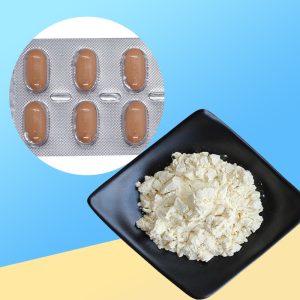
| Appearance | White to light yellow fine powder |
| Odor | Characteristic, slight fermentation odor |
| Taste | Slightly bitter, characteristic of natto |
| Solubility | Soluble in water and aqueous buffers; insoluble in organic solvents |
| Bulk Density | 0.40 – 0.60 g/mL |
| Tap Density | 0.50 – 0.70 g/mL |
| Particle Size | ≥80 mesh (≥95% pass through) |
| pH (1% aqueous solution) | 5.5 – 7.5 |
| Loss on Drying | ≤ 5.0% |
| Residue on Ignition | ≤ 5.0% |
| Heavy Metals (as Pb) | ≤ 10 ppm |
| Arsenic (As) | ≤ 2 ppm |
| Lead (Pb) | ≤ 3 ppm |
| Cadmium (Cd) | ≤ 1 ppm |
| Mercury (Hg) | ≤ 0.1 ppm |
| Total Plate Count | ≤ 1,000 CFU/g |
| Yeast & Mold | ≤ 100 CFU/g |
| E. coli | Negative |
| Salmonella | Negative |
| Staphylococcus aureus | Negative |
Applications

Dietary Supplements & Nutraceuticals (Largest Segment):
Nattokinase is the dominant fibrinolytic enzyme in the dietary supplement industry, with over 68% of cardiovascular health supplement formulations incorporating it as a primary ingredient (Market Growth Reports, 2025). Common product formats include:
- Capsules: 2,000-4,000 FU per capsule (most common format)
- Tablets: Compressed formulations with enteric coating for gastric protection
- Softgels: Liquid-filled for enhanced bioavailability
- Powder sachets: Single-dose convenience formats
- Combination formulas: Blended with CoQ10, omega-3, vitamin K2, magnesium, or hawthorn extract
- Gummies: Emerging format for improved consumer compliance
Functional Foods & Beverages:
- Functional beverages (heart health shots, wellness drinks)
- Fortified dairy products (yogurt, fermented milk drinks)
- Protein bars and functional snacks
- Soy-based functional foods leveraging the natural natto association
- Meal replacement powders with cardiovascular health positioning
Pharmaceutical Research:
- Investigational new drug (IND) research for thrombotic disorders
- Fibrinolytic enzyme therapy development
- Adjunctive therapy for cardiovascular disease management
- Research into cerebral infarction and stroke prevention
- Drug delivery system research (enteric-coated, liposomal, nanoparticle formulations)
FAQ
Q1: What is the recommended dosage of nattokinase for dietary supplements?
The typical recommended dosage for dietary supplement formulations ranges from 2,000 FU to 4,000 FU per daily serving (one or two capsules). Clinical studies have used doses between 2,000 FU and 8,000 FU per day without significant safety concerns. The optimal dose depends on the target indication, formulation design (e.g., enteric coating), and intended consumer population. We recommend consulting with a qualified healthcare professional for specific dosage recommendations.
Q2: How does Xi’an Taima measure enzyme activity (FU)?
We measure nattokinase activity using the validated UV spectrophotometric fibrin degradation method at 275 nm, following the methodology established by the Japan Natto Kinase Association (JNKA). One Fibrinolytic Unit (FU) is defined as the amount of enzyme that produces an increase in absorbance at 275 nm equivalent to 1 μg of tyrosine per minute under standardized conditions (37°C, pH 8.0). Each batch is tested in triplicate, and results are reported on the Certificate of Analysis. We also provide enzyme activity expressed in international units (IU) upon request.
Q3: Is nattokinase heat-stable? Can it be used in baked goods or hot beverages?
Nattokinase is a protein enzyme and is sensitive to high temperatures. Its optimal activity range is 37°C-55°C, and significant activity loss occurs above 60°C. For food and beverage applications requiring heat processing, we recommend: (1) adding nattokinase after the heating step when the product has cooled below 50°C; (2) using microencapsulated or enteric-coated forms for improved thermal stability; or (3) formulating in cold-process applications such as ready-to-drink beverages, smoothies, or energy shots.
Q4: What is the difference between FU (Fibrinolytic Units) and IU (International Units)?
FU (Fibrinolytic Units) is the standard activity measurement for nattokinase based on its fibrin-degrading ability. IU (International Units) is a different measurement based on caseinolytic or general proteolytic activity. The conversion between FU and IU is not straightforward as they measure different enzymatic activities. Typically, 20,000 FU/g nattokinase corresponds to approximately 20,000-24,000 IU/g of proteolytic activity, but this ratio can vary depending on the specific assay conditions and enzyme purity. We recommend using FU as the primary specification for cardiovascular health applications, as it directly correlates with the therapeutic mechanism of action.
Q5: Can you provide samples for testing before placing a bulk order?
Yes, we provide free samples (typically 10-50 grams) for evaluation and testing purposes. Sample dispatch is processed within 3-5 business days after confirmation. For international customers, samples are shipped via express courier (DHL, FedEx, UPS) with typical delivery times of 5-10 business days depending on the destination. The customer is responsible for shipping costs on sample orders unless otherwise agreed. Bulk orders typically ship within 7-15 business days after order confirmation and payment.
Q6: Is nattokinase suitable for vegetarian and vegan formulations?
Yes, nattokinase produced through Bacillus subtilis fermentation of non-GMO soybeans is suitable for vegetarian formulations. Unlike animal-derived enzymes (e.g., lumbrokinase from earthworms), nattokinase is 100% microbial in origin and compatible with vegetarian and plant-based product positioning. For vegan formulations, please confirm capsule material preferences (HPMC/vegetarian capsules vs. gelatin). Xi’an Taima can supply nattokinase with vegan-compatible documentation and certifications (KOSHER, HALAL) upon request.