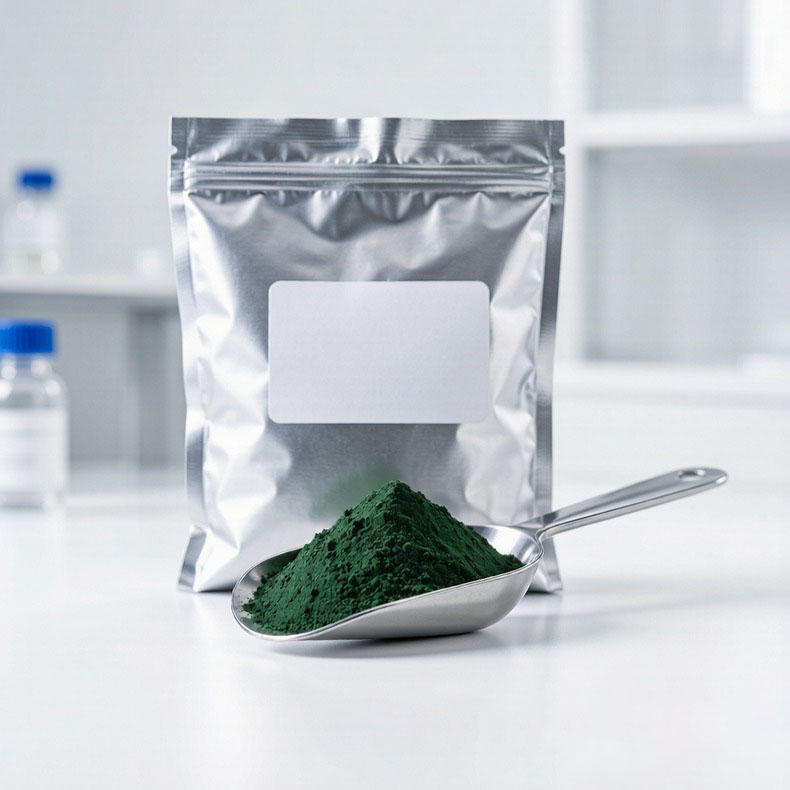
CAS 1406-65-1 | Natural Green Pigment & Dietary Ingredient
Product Introduction
Chlorophyll (CAS 1406-65-1) is the natural green pigment found in plants, algae, and cyanobacteria, responsible for photosynthesis — the fundamental process that converts sunlight into chemical energy. At Xi’an Taima Biological Co., Ltd., we supply high-purity chlorophyll extract powder and liquid derived from premium natural sources including alfalfa (Medicago sativa), mulberry leaves (Morus alba), and spinach (Spinacia oleracea), processed through advanced solvent extraction and purification technology to preserve maximum bioactivity.
Product Identification
| Parameter | Specification |
| CAS Number | 1406-65-1 |
| EC Number | 215-800-7 |
| E Number (Food Additive) | E140 (Natural Chlorophyll) / E141 (Copper Chlorophyllin) |
| Chemical Name | Chlorophyll (Magnesium pheophytin) |
| Molecular Formula (Chl a) | C55H72MgN4O5 |
| Molecular Formula (Chl b) | C55H70MgN4O6 |
| Molecular Weight (Chl a) | 893.49 g/mol |
| Botanical Sources | Alfalfa (Medicago sativa), Mulberry leaf (Morus alba), Spinach (Spinacia oleracea), Nettle (Urtica dioica), Bamboo leaf |
| Plant Part Used | Fresh aerial parts (leaves) |
| Appearance | Dark green to olive-green fine powder or viscous paste/liquid |
| Odor & Taste | Characteristic green plant odor, slightly bitter taste |
| Solubility | Oil-soluble (natural chlorophyll); Water-soluble (sodium copper chlorophyllin derivative) |
| Stability | Light-sensitive; sodium copper chlorophyllin offers enhanced heat/light/pH stability |
| Shelf Life | 24 months under recommended storage conditions |
| Storage | Store in a cool, dry place (15-25 C), away from direct light and moisture |
Application
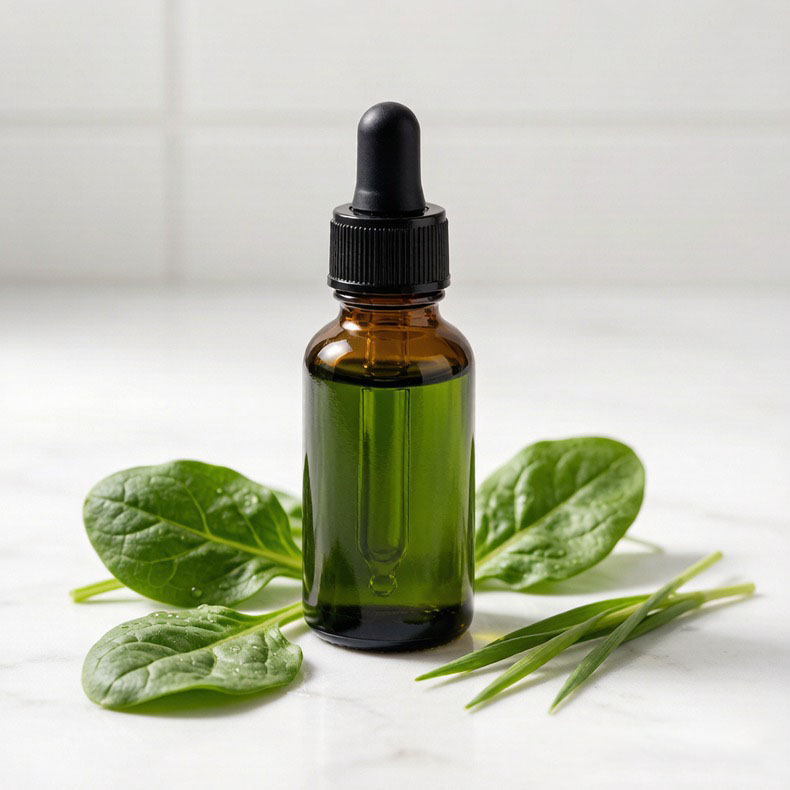
Dietary Supplements & Nutraceuticals
- Chlorophyll Capsules/Tablets (100-300 mg chlorophyllin, alone or in “green superfood” blends)
- Liquid Chlorophyll Drops (popular detox/cleanse format, added to water or smoothies)
- Green Superfood Powders (blended with spirulina, chlorella, wheatgrass, barley grass)
- Internal Deodorant Formulations (targeting body odor, halitosis, digestive odor)
- Detox & Cleanse Kits (combined with fiber, activated charcoal, milk thistle)
- Alkalizing Greens Formulas (pH balance supplements)
Food & Beverage Industry
- E140 (Natural Chlorophyll) / E141 (Copper Chlorophyllin) approved food colorants in EU, US, China, Japan, Codex Alimentarius
- Beverages: green smoothies, sports drinks, functional waters, matcha-style drinks
- Confectionery: green candies, chewing gum, ice cream, frosting
- Dairy: green yogurt, ice cream, plant-based milk alternatives
- Bakery: green bread, cakes, pastries, noodles/pasta
FAQ
Q1: What is the difference between natural chlorophyll and sodium copper chlorophyllin?
Natural chlorophyll (CAS 1406-65-1, E140) is the native magnesium-containing pigment extracted from green plants. It is oil-soluble, less stable to heat/light/pH changes, and has an olive-green color. Sodium copper chlorophyllin (CAS 11006-34-1, E141) is a semi-synthetic derivative where magnesium is replaced by copper, making it water-soluble, highly stable across a wide pH range, and producing a bright emerald green color. For beverages, water-based foods, toothpaste, and pharmaceutical applications, sodium copper chlorophyllin (E141) is the preferred choice. For oil-based supplements, cosmetics, and clean-label “natural” positioning, natural chlorophyll (E140) is optimal.
Q2: What is the recommended daily dosage of chlorophyll supplements?
Typical recommended dosages for chlorophyll/chlorophyllin supplements are: For general health and antioxidant support: 100-200 mg/day. For internal deodorization: 100-300 mg/day in divided doses. For liquid chlorophyll drops: 15-30 drops (approximately 1-2 mL) in water, 1-3 times daily, equivalent to approximately 50-150 mg chlorophyllin per serving. Always follow the specific product label instructions and consult a healthcare professional before use.
Q3: Is chlorophyll safe? Are there any side effects?
Chlorophyll and sodium copper chlorophyllin are generally recognized as safe (GRAS) by the FDA for their intended use in foods and supplements. Clinical studies with daily doses up to 300 mg of chlorophyllin for several months have demonstrated excellent safety profiles. Potential mild side effects may include green-colored urine/stool (harmless cosmetic effect), occasional mild digestive discomfort, and rare photosensitivity at very high doses. Contraindications: individuals with known hypersensitivity to chlorophyll or copper compounds. Pregnant/nursing women should consult a healthcare provider.
Q4: Can you provide organic-certified chlorophyll?
Yes, we offer organic-certified chlorophyll powder derived from certified organic alfalfa (Medicago sativa) and mulberry leaf (Morus alba) sources. Our organic grades comply with USDA NOP (National Organic Program) and EU Organic (EC 834/2007) standards, certified by recognized third-party bodies (e.g., ECOCERT, CERES). Organic chlorophyll is subject to minimum order quantities (typically 25 kg) and may have slightly longer lead times due to certification documentation processing.
Q5: What is the minimum order quantity (MOQ) for chlorophyll products?
For sample/trial orders: 100g – 1 kg (available immediately from stock). For commercial orders: Standard powder grades: 25 kg (1 drum). Sodium copper chlorophyllin: 1 kg for trial, 25 kg for bulk. Liquid extracts: 25 kg (1 drum). Customized packaging and private label (OEM/ODM) services are available with higher MOQs (typically 100 kg+). Please contact our sales team for current pricing and availability.
Q6: How does chlorophyll work as an internal deodorant?
Chlorophyllin (the water-soluble derivative) works as an internal deodorant through a molecular complexation mechanism. Odor-causing compounds such as trimethylamine (responsible for fish odor in trimethylaminuria), indole, skatole, and sulfur-containing metabolites are produced by gut bacteria during protein metabolism. Chlorophyllin binds these compounds in the intestinal lumen, forming non-absorbable complexes that are excreted in feces rather than entering systemic circulation and being eliminated through breath, sweat, and urine. This mechanism is particularly beneficial for colostomy/ileostomy patients, individuals with halitosis, and those experiencing body odor concerns.