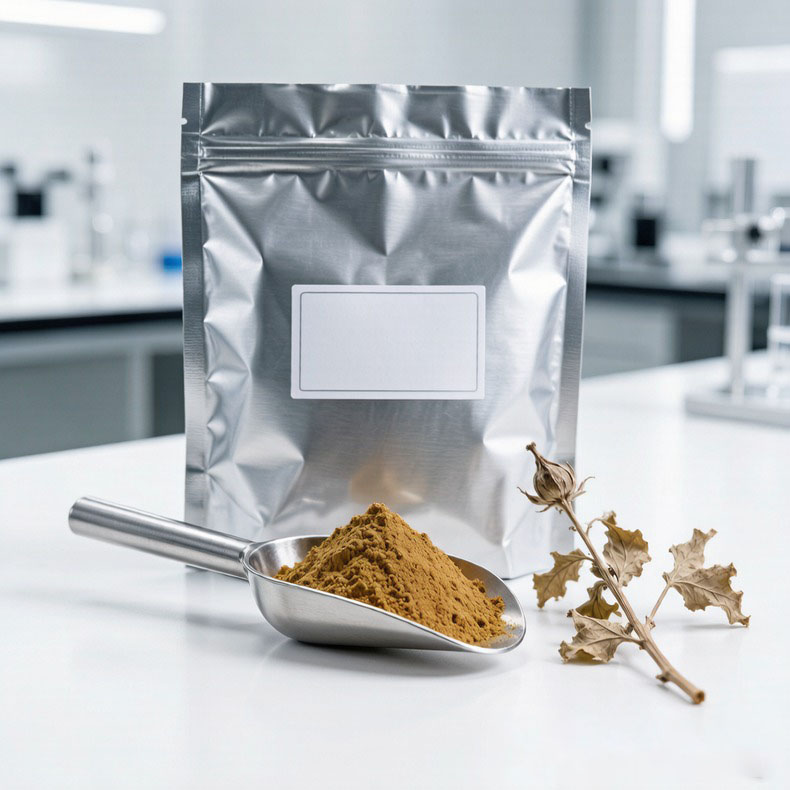
Macleaya cordata Extract CAS:112025-60-2 Natural Benzophenanthridine Alkaloids for Antibiotic-Free Animal Nutrition

Product Introduction
Macleaya cordata (Willd.) R. Br., commonly known as plume poppy or five-seeded plume-poppy, is a perennial herbaceous plant belonging to the Papaveraceae family, native to China and Japan. The aerial parts (fruit, leaves, and stems) of Macleaya cordata are rich in bioactive benzophenanthridine alkaloids, primarily sanguinarine and chelerythrine, which have been extensively researched and commercially adopted as natural alternatives to antibiotic growth promoters (AGPs) in animal feed.
Product Identification
| Attribute | Detail |
| Product Name | Macleaya cordata Extract / Plume Poppy Extract |
| CAS Number | 112025-60-2 |
| Botanical Name | Macleaya cordata (Willd.) R. Br. |
| Plant Family | Papaveraceae |
| Plant Part Used | Aerial parts (fruit, leaves, stems) |
| Active Compounds | Sanguinarine, Chelerythrine (Benzophenanthridine Alkaloids) |
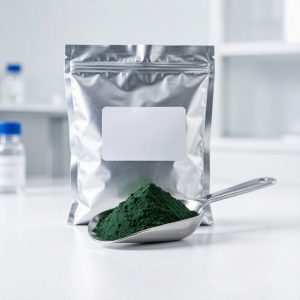
| Appearance | Fine powder, yellow-brown to brown |
| Odor | Characteristic herbal odor |
| Solubility | Partially soluble in water; soluble in ethanol and acidic solutions |
| Shelf Life | 24 months when stored properly |
| Storage | Cool, dry place away from direct sunlight, sealed container |
| Grade | Feed grade / Veterinary grade |
Application

Poultry (Broilers, Layers, Breeders)
Improved body weight gain: +3% to +8% vs. control diets
Improved feed conversion ratio (FCR): -2% to -5%
Reduced intestinal Clostridium perfringens counts, lowering necrotic enteritis risk
Enhanced villus height and crypt depth ratio in duodenum and jejunum
Reduced mortality and improved flock uniformity
In layers: improved egg production rate, eggshell quality, and yolk color
Swine (Piglets, Grower-Finisher, Sows)
Improved average daily gain (ADG) in weaned piglets: +5% to +12%
Reduced incidence and severity of post-weaning diarrhea
Enhanced intestinal morphology: increased villus height, reduced crypt depth
Modulation of gut microbiota toward beneficial Lactobacillus and Bifidobacterium populations
Reduced systemic inflammation markers (serum TNF-α, IL-6)
In sows: improved lactation performance and piglet weaning weight
FAQ
Q: What is the difference between sanguinarine and chelerythrine?
A: Sanguinarine and chelerythrine are both quaternary benzophenanthridine alkaloids (QBAs) found naturally in Macleaya cordata. Sanguinarine is the primary alkaloid (typically 60%–80% of total alkaloids) and is primarily responsible for the antimicrobial and anti-inflammatory effects. Chelerythrine (15%–30% of total alkaloids) contributes additional antimicrobial activity and has been shown to enhance gut barrier integrity. The two compounds work synergistically, and the natural 3:1 to 4:1 ratio in our extract is preserved to maintain optimal efficacy.
Q: How does Macleaya cordata extract compare to antibiotic growth promoters (AGPs)?
A: Unlike antibiotics, which target specific bacterial pathways (making resistance development likely), Macleaya cordata alkaloids work through physical membrane disruption and multi-target pharmacological mechanisms that bacteria cannot easily develop resistance against. Meta-analyses show that Macleaya cordata extract achieves 70%–90% of the growth promotion effect of AGPs under commercial conditions, with the added benefits of gut health modulation and no withdrawal period. It is best used as part of a comprehensive antibiotic-free program alongside good biosecurity, vaccination, and optimized nutrition.
Q: What is the recommended inclusion rate for broiler feed?
A: The recommended inclusion rate for broilers is 20–50 mg of total alkaloids per kg of complete feed. For example, using our MC-E10 (10% total alkaloids) powder, the inclusion would be 200–500 g per metric ton of feed. For MC-E20 (20% total alkaloids), the inclusion would be 100–250 g per metric ton. We recommend starting at the higher end of the range during the starter phase (day 1–21) and reducing for the grower-finisher phase. Our technical team can provide species-specific formulation recommendations.
Q: Is Macleaya cordata extract safe for the animals? Any toxicity concerns?
A: Macleaya cordata extract is safe at recommended inclusion rates. Extensive toxicological evaluations including acute, sub-chronic, and chronic toxicity studies have established wide safety margins. The No Observed Adverse Effect Level (NOAEL) is several multiples above the recommended feed inclusion range. The product has been approved by the European Food Safety Authority (EFSA) for use in food-producing animals with no concerns for consumer safety when used as directed. No withdrawal period is required.
Q: Can Macleaya cordata extract be used together with organic acids, essential oils, or probiotics?
A: Yes. Macleaya cordata extract is highly compatible with other phytogenic and organic feed additives. Combination with organic acids (e.g., formic, citric, butyric acid) can provide complementary gut acidification benefits. Pairing with essential oils (e.g., thymol, carvacrol) can broaden the antimicrobial spectrum. Synergistic effects with probiotics (Bacillus, Lactobacillus) have been reported, with Macleaya modulating the gut environment to favor probiotic colonization. We recommend consulting with our technical team for specific combination strategies.
Q: Do you provide free samples for feed trial evaluation?
A: Yes, we provide free samples (typically 100 g – 500 g) for initial evaluation and small-scale feed trials. The customer is responsible for shipping costs. For larger trial quantities (1–5 kg) needed for commercial-scale feed mill trials, we offer discounted trial pricing. Contact our sales team with your species, trial design, and delivery address.