High-purity Ethyl Vanillin (CAS 121-32-4) powder — 3-4× stronger than standard vanillin
Product Introduction
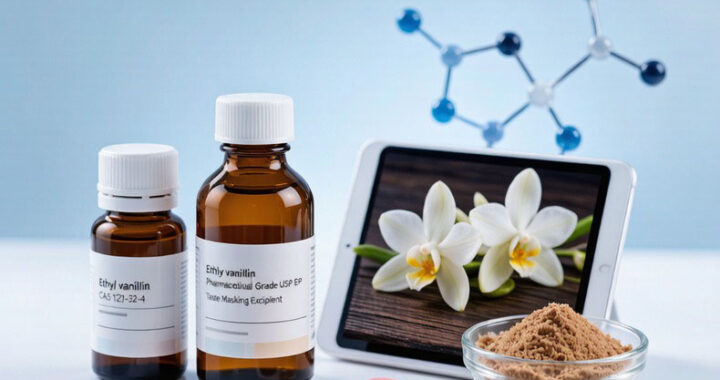
Ethyl vanillin (3-ethoxy-4-hydroxybenzaldehyde) is a synthetic vanilla flavor compound and one of the most important aroma chemicals in the global flavor and fragrance industry. First synthesized in the early 20th century, ethyl vanillin has been commercially used in food products since the 1930s and is now recognized as the high-potency alternative to standard vanillin.
Identification Parameters
| Parameter | Value / Description |
| Chemical Name (IUPAC) | 3-Ethoxy-4-hydroxybenzaldehyde |
| Common Name | Ethyl vanillin; Ethylvanillin; EVA; Bourbonal |
| CAS Registry Number | 121-32-4 |
| Molecular Formula | C₉H₁₀O₃ |
| Molecular Weight | 166.17 g/mol |
| FEMA Number | 2464 |
| FLAVIS Number | 05.019 |
| JECFA Number | 893 |
| E Number / Food Additive | Listed in FDA EAFUS; Not assigned EU E-number |
| FDA UNII | YC9ST449YJ |
| HS Code | 2912.42.00 |
| MDL Number | MFCD00006944 |
| InChIKey | CBOQJANXLMLOSS-UHFFFAOYSA-N |
Applications
| Sub-Category | Typical Dosage (ppm) | Application Notes |
| Bakery (bread, cakes, cookies) | 500–2,000 ppm | Compensate 15–25% baking loss; add post-bake or microencapsulate |
| Chocolate & Compound Coatings | 200–800 ppm | Round cocoa bitterness; enhance vanilla top note |
| Hard & Chewy Candies | 200–1,000 ppm | Heat-stable through sugar boiling; uniform pre-blend essential |
| Caramel & Toffee | 300–1,000 ppm | Support cooked-sugar flavor; warm sweet profile |
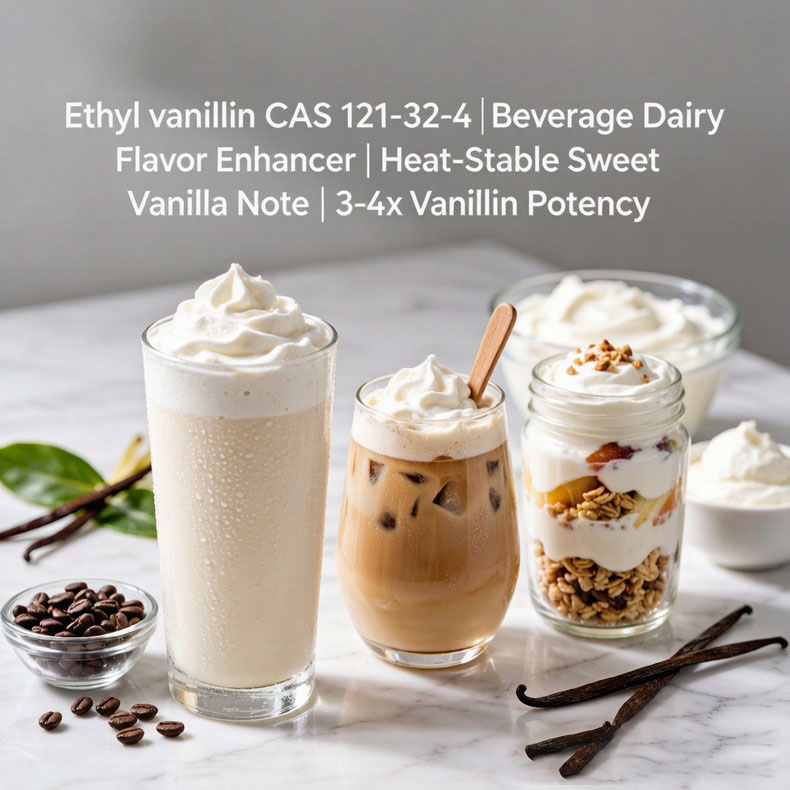
| Ice Cream & Frozen Desserts | 50–300 ppm | Intense vanilla impact at lower dosage; creamy mouthfeel support |
| Yogurt & Dairy Desserts | 30–150 ppm | Enhance sweet perception in reduced-sugar dairy |
| Flavored Milk & Plant-Based Milk | 10–80 ppm | Pre-dissolve in ethanol before adding to liquid base |
| Beverages (RTD, powdered) | 10–100 ppm | Ensure complete dissolution; compatible with clear beverages |
| Coffee & Cocoa Drinks | 20–80 ppm | Smooth bitter edges; support creamy mouthfeel |
| Chewing Gum | 500–2,000 ppm | Long-lasting flavor release; good encapsulation compatibility |
| Dietary Supplements (gummies, powders) | 100–500 ppm | Mask vitamin/mineral off-tastes; improve palatability |
FAQ
Q1: What is ethyl vanillin?
Ethyl vanillin (CAS 121-32-4) is a synthetic vanilla flavor compound approximately 3–4 times stronger than standard vanillin. It is a white to off-white crystalline powder with an intense sweet creamy vanilla aroma, widely used in food, beverage, pharmaceutical, and fragrance industries since the 1930s.
Q2: How much stronger is ethyl vanillin compared to regular vanillin?
Ethyl vanillin is approximately 3 to 4 times more potent than standard vanillin in flavor strength. In practical formulation, this means you can use 25–33% of the standard vanillin dosage to achieve equivalent vanilla impact, making it highly cost-effective. The flavor profile is also described as sweeter, creamier, and longer-lasting.
Q3: What are the main applications of ethyl vanillin?
Ethyl vanillin is used across four major industries: (1) Food & Beverage — bakery, chocolate, confectionery, ice cream, dairy, and beverages; (2) Pharmaceutical — taste masking for bitter APIs in syrups, chewable tablets, and pediatric formulations; (3) Fragrance & Cosmetics — perfumes, lotions, soaps, and home fragrance as a fixative and sweet vanilla note; (4) Industrial — electroplating brightener, chemical intermediate, and animal feed palatability enhancer.
Q4: What purity grades are available?
We supply four standard grades: Food Grade (FCC, ≥99.0%), Premium Food Grade (≥99.5%), Pharmaceutical Grade (USP/EP, ≥99.5%), and Fragrance Grade (≥99.0%). Custom specifications are available upon request. All grades are supported with full COA documentation.
Q5: Is ethyl vanillin heat-stable for baking applications?
Yes, ethyl vanillin is thermally stable up to approximately 230 °C, making it suitable for baking and high-temperature confectionery processing. However, some flavor loss (15–25%) may occur during extended baking. We recommend compensating for this loss in your formulation or using microencapsulated forms for optimized heat protection.
Q6: What are the recommended storage conditions and shelf life?
Store below +30 °C in a cool, dry area, protected from light in tightly sealed original containers. Shelf life is 24–36 months from the date of manufacture when stored under recommended conditions. Avoid contact with iron, steel, and alkaline materials, which may cause discoloration.