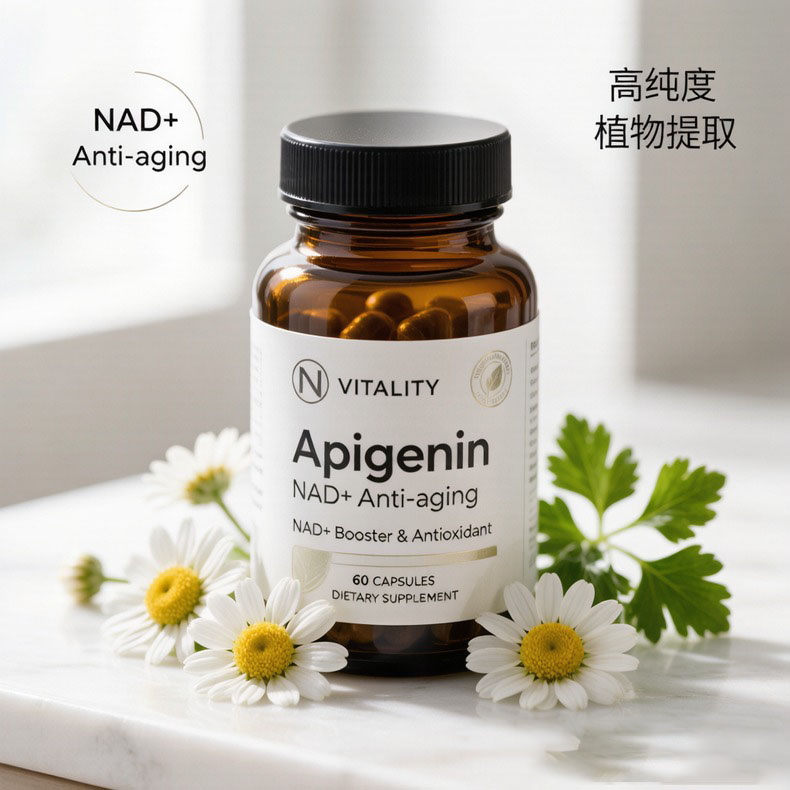
Apigenin (CAS 520-36-5) Natural Flavonoid Extract
Product Introduction
Apigenin (CAS 520-36-5) is a naturally occurring bioactive flavonoid belonging to the flavone subclass, widely recognized for its remarkable therapeutic potential across multiple health domains. As one of the most extensively studied plant-derived compounds, apigenin has emerged as a premium ingredient in the global nutraceutical, pharmaceutical, and personal care industries.
Chemical Identity
| Parameter | Specification |
| Chemical Name | 4′,5,7-Trihydroxyflavone |
| CAS Number | 520-36-5 |
| Molecular Formula | C15H10O5 |
| Molecular Weight | 270.24 g/mol |
| IUPAC Name | 5,7-Dihydroxy-2-(4-hydroxyphenyl)-4H-chromen-4-one |
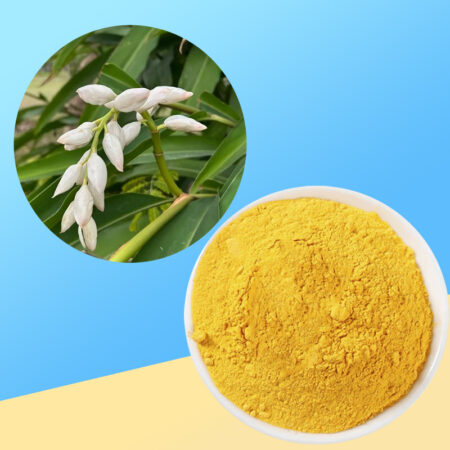
| Appearance | Fine yellowish to off-white crystalline powder |
| Solubility | Soluble in DMSO, ethanol; poorly soluble in water |
| Melting Point | 345-346 C (decomposes) |
| Purity (HPLC) | >=95% / >=98% |
Applications
| Product Category | Positioning | Typical Dosage | Target Consumer |
| NAD+/Longevity Stacks | CD38 inhibitor paired with NMN/NR | 50 mg/day | Biohackers, anti-aging 35+ |
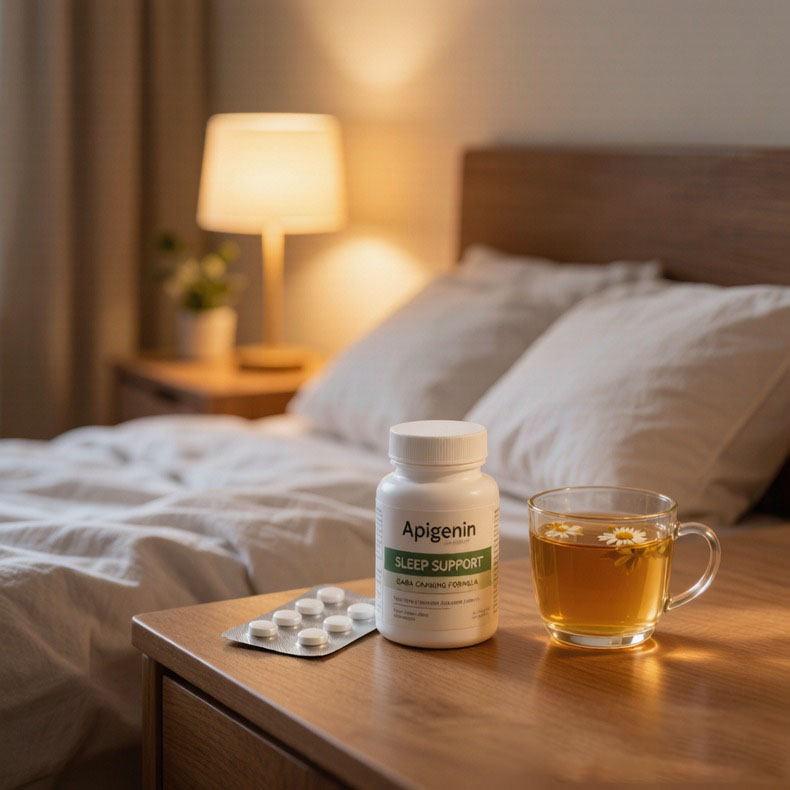
| Sleep Aid Formulas | GABA-modulating calming agent | 20-50 mg at bedtime | Adults with stress-related insomnia |
| Anxiety Relief Supplements | Natural anxiolytic alternative | 25-50 mg/day | High-stress professionals, GAD |
| Cognitive Enhancers (Nootropics) | Neuroprotective flavonoid | 10-30 mg/day | Students, professionals |
| Men Health / Prostate | Anti-androgenic, anti-proliferative | 20-50 mg/day | Men 40+ seeking prostate support |
| Women Health | ER-beta selective modulation | 20-40 mg/day | Perimenopausal/menopausal women |
| Multiflavonoid Complexes | Synergistic antioxidant blend | 10-20 mg (component) | General wellness consumers |
| Sports Recovery | Anti-inflammatory, MAO inhibition | 25-50 mg post-workout | Athletes seeking faster recovery |
FAQ
Q: What is the difference between 95% and 98% purity apigenin?
A: 95% purity offers excellent cost-effectiveness for most dietary supplement and food applications. 98% purity is recommended for pharmaceutical-grade formulations, clinical research materials, and premium cosmetic products where maximum purity is required. Both grades are verified by HPLC analysis.
Q: How does apigenin compare to quercetin and luteolin?
A: While all three are well-studied flavonoids often found together in plants, apigenin uniquely combines CD38 inhibition (for NAD+ boosting) with GABA-A modulation (for calming/sleep). Quercetin shows stronger antihistamine effects. Luteolin demonstrates superior antiviral activity (94.13% EV71 vs. 85.65%). Choice depends on target application.
Q: Is apigenin water-soluble?
A: Pure apigenin has very poor water solubility (<0.001 g/100 mL), which historically limited bioavailability. Modern formulation technologies – nanoparticle encapsulation, solid dispersions (achieving 100% dissolution at pH 6.8), phospholipid complexes, cyclodextrin complexes – have dramatically improved solubility and oral absorption.
Q: Can apigenin be taken long-term?
A: Current evidence suggests excellent long-term safety. A 2-year open-label study using apigenin-containing formulation showed continued benefits without adverse effects. Chamomile (rich in apigenin) has been consumed safely for centuries. However, formal long-term (>1 year) randomized controlled trials are still needed.
Q: Does apigenin interact with medications?
A: Most clinically relevant interaction is moderate CYP2C9 inhibition, potentially elevating blood levels of warfarin, phenytoin, and some NSAIDs. Patients on these medications should consult healthcare providers. Theoretical platelet interaction suggests caution with anticoagulants.
Q: What is the shelf life of apigenin powder?
A: Properly stored in cool, dry place away from light, apigenin powder typically maintains specification for 24-36 months. Our material is supplied in aluminum foil bags with desiccants. Accelerated stability data available upon request.