Cosmetic Fragrance Raspberry Ketone CAS 5471-51-2 Fresh Berry Scent Raw Material For Perfume Cream Mask
Product Introduction
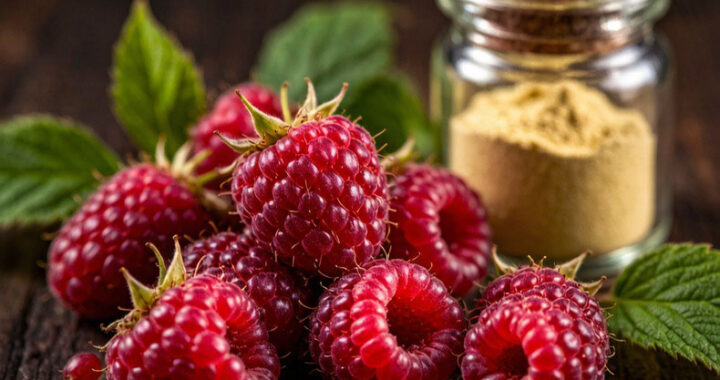
Raspberry Ketone CAS 5471-51-2) is a natural phenolic compound that serves as the primary aromatic constituent of red raspberries (Rubus idaeus L.). Beyond its well-established role as a premium flavoring agent (FEMA No. 2588) used globally in food, beverage, fragrance, and cosmetic industries, raspberry ketone has emerged as a scientifically investigated bioactive ingredient targeting lipid metabolism, adipose tissue function, and body composition management.
Fundamental Chemical Parameters
| Parameter | Value |
| Chemical Name | 4-(4′-Hydroxyphenyl)-2-butanone |
| Synonyms | Raspberry Ketone; Frambione; Rheosmin; Oxyphenylon |
| CAS Number | 5471-51-2 |
| EINECS/EC Number | 226-853-5 |
| Molecular Formula | C10H12O2 |
| Molecular Weight | 164.20 g/mol |
| Exact Mass | 164.0837 Da |
| Canonical SMILES | CC(=O)CCC1=CC=C(C=C1)O |
| InChI Key | NJGBTKGETPDVIK-UHFFFAOYSA-N |
| XLogP3-AA (logP) | 1.5 (moderately lipophilic) |
| Hydrogen Bond Donors | 1 |
| Hydrogen Bond Acceptors | 2 |
| Rotatable Bonds | 3 |
| Topological Polar Surface Area | 37.3 A^2 |
| Heavy Atom Count | 12 |
| Complexity | 146 |
| Stereo Centers | 0 (achiral molecule) |
Applications
Weight Management & Body Composition (Primary Application)
- Lipolysis promotion via NE-HSL-ATGL axis potentiation
- Fatty acid oxidation enhancement through PPAR-alpha activation
- Adiponectin-mediated improvement in insulin sensitivity and metabolic flexibility
- Anti-adipogenic effect limiting new fat cell differentiation
- Potential pancreatic lipase inhibition reducing dietary fat absorption
- Best positioned as: Adjunctive metabolism support ingredient in multi-component formulas
Liver Health & Hepatoprotection
- Protection against non-alcoholic fatty liver disease (NAFLD) progression
- Reduction of hepatic triglyceride accumulation in HFD animal models
- Antioxidant defense restoration (SOD increase, TBARS decrease) in chemically induced liver injury
- NASH reversal via autophagy regulation and PPAR-alpha/LDLR normalization
- Relevant for: Sports nutrition (athlete liver stress) and general wellness formulations
Cardiovascular Support
- Cardioprotective effect in isoproterenol-induced MI rat model (dose-dependent, 100-200 mg/kg effective)
- Comparable efficacy to fenofibrate (prescription PPAR-alpha agonist) in infarct size reduction
- Potential blood pressure and lipid-modulating effects via adiponectin pathway
- Note: Direct human cardiovascular outcome data not yet available
FAQ
Q1: What is the difference between ‘natural’ and ‘synthetic’ raspberry ketone?
Natural raspberry ketone is extracted directly from Rubus idaeus (red raspberry) or other botanical sources like Rheum palmatum (Korean rhubarb). It can legally carry a ‘natural’ label but costs $15,000-20,000+ per kg due to the tiny natural abundance (~4 mg/kg in raspberries). Synthetic raspberry ketone is produced via chemical synthesis (aldol condensation of p-hydroxybenzaldehyde and acetone followed by hydrogenation). It has identical molecular structure, identical biological activity, and costs $300-800/kg. Under EU and US law, synthetic RK must be labeled as ‘nature-identical flavor’ and cannot be called ‘natural.’ Both forms produce identical analytical results on HPLC.
Q2: Does raspberry ketone really work for weight loss?
The honest answer based on current evidence: Raspberry ketone shows promising mechanisms in laboratory and animal studies (increased lipolysis, enhanced fatty acid oxidation, elevated adiponectin), but there are currently NO published randomized controlled trials proving that raspberry ketone BY ITSELF causes significant weight loss in humans. The only human study (METABO, 2018) tested a multi-ingredient product containing RK plus caffeine, capsaicin, bitter orange, and other actives, making it impossible to attribute the observed 1.9 kg weight loss specifically to RK. We recommend positioning RK as a science-backed component within multi-ingredient thermogenic formulations, not as a standalone miracle solution.
Q3: What is the recommended daily dosage?
There is no officially established optimal dose because adequate human dose-response studies do not exist. Current market products contain 100-1400 mg per day, with 200-400 mg being the most common range. Based on extrapolation from animal effective doses (adjusted for allometric scaling) and considering the lack of human safety data at high doses, we recommend a conservative starting point of 100-200 mg per day when formulated with complementary ingredients (caffeine, green tea, etc.). Always follow the specific product label directions and consult a healthcare provider before beginning any new supplement regimen.
Q4: Is raspberry ketone safe? What are the side effects?
Raspberry ketone has GRAS status as a flavoring agent at normal dietary intake levels (a few milligrams per day). However, safety at the much higher doses used in supplements (100-1400 mg/day) has NOT been systematically studied in humans. Animal data suggests that doses above 330 mg/kg (equivalent scale) may cause growth retardation, and 500 mg/kg caused elevated blood sugar and liver enzymes (ALT) in mice. Theoretical QSAR models predict potential reproductive and cardiac risks that remain experimentally unverified. Known practical considerations: (1) May cause jitteriness when combined with caffeine (due to adrenergic mechanism), (2) Topical products can cause skin depigmentation (leukoderma-like effect) at concentrations exceeding IFRA limits, (3) Should be avoided by pregnant/nursing women until reproductive safety is established.
Q5: Can raspberry ketone replace diet and exercise?
Absolutely not. There is no supplement — including raspberry ketone — that can substitute for caloric deficit and physical activity as the foundation of sustainable weight management. If any product makes such a claim, it is misleading. Raspberry ketone, at best, may serve as an adjunctive supportive ingredient within a comprehensive program that includes: appropriate caloric intake, regular exercise (both resistance and cardiovascular), adequate sleep, stress management, and professional medical supervision for individuals with obesity-related comorbidities. Responsible marketing emphasizes this context explicitly.
Q6: How does raspberry ketone compare to green tea extract for weight loss?
Green tea extract (specifically EGCG) has significantly stronger clinical evidence: 14+ published RCTs, systematic reviews by Cochrane Collaboration, and meta-analyses showing modest but consistent average weight reductions of 0.95-1.38 kg over 12 weeks. Raspberry ketone has zero published single-agent human trials. Mechanistically, they work differently: Green tea primarily acts through catecholaminergic stimulation plus caffeine synergy, while raspberry ketone’s unique angle is norepinephrine-potentiated lipolysis via HSL translocation plus PPAR-alpha-mediated fatty acid oxidation plus adiponectin upregulation. They are potentially COMPLEMENTARY (not competing) mechanisms, which is why many formulators include BOTH in thermogenic blends.