Product Introduction
| Item | Specification |
| Product Name | Palmatine |
| Synonyms | 5,6-Dihydro-2,3,9,10-tetramethoxydibenzo[a,g]quinolizinium; Palmatine free base |
| CAS Number | 3486-67-7 |
| Molecular Formula | C₂₁H₂₂NO₄ |
| Molecular Weight | 352.40 g/mol |
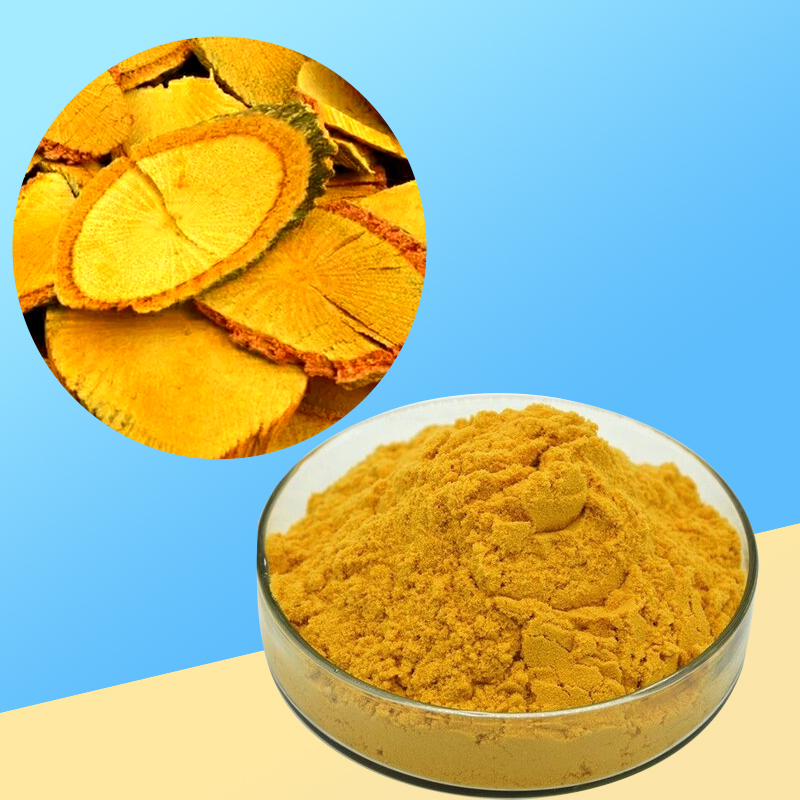
| Appearance | Yellow crystalline powder, odorless, stable crystal form under sealed dark and dry conditions |
| Purity (HPLC) | ≥98.0% / ≥99.0% (Research Grade / Pharma API Grade, customizable) |
| Loss on Drying | ≤ 0.2% |
| Residue on Ignition | ≤ 0.1% |
| Testing Method | HPLC / NMR / Mass Spectrometry / IR Spectrum / Cell Activity Detection |
| Production Method | Natural Plant Extraction (Fibraurea Recisa) & Multi-Stage Resin Purification & Low-Temperature Recrystallization |
| Melting Point | 205°C (dec., lit.) |
| Boiling Point | 589.7°C at 760 mmHg |
| Density | 1.32 g/cm³ at 25°C |
| Flash Point | 241.3°C |
| Solubility | Soluble in hot water, methanol, ethanol and DMSO; slightly soluble in cold water; stable in dry environment, sensitive to strong light and high temperature |
| Core Feature | Natural protoberberine-type isoquinoline alkaloid, homologous to Berberine, with broad-spectrum antibacterial, anti-inflammatory and antioxidant activity |
| Package | 1g/5g/10g sealed amber bottle, 100g/1kg drum; vacuum moisture-proof packaging, custom specification available |
| Storage | Store in vacuum-sealed, low-temperature, dark and dry conditions; avoid strong light, high temperature and humid environment to prevent oxidation and structural degradation |
| Shelf Life | 24 months under standard low-temperature sealed storage |
Product Description
Our Palmatine is a high-purity natural protoberberine isoquinoline alkaloid with stable molecular structure and complete multi-target pharmacological activity, available in premium research grade and pharmaceutical API grade. Palmatine (CAS 3486-67-7), commonly known as Fibraurea Recisa extract or Huangtengsu, is a core bioactive botanical ingredient mainly extracted from Fibraurea recisa, Phellodendron chinensis and Coptis chinensis. Structurally homologous to Berberine, Palmatine features a classic tetramethoxy-substituted protoberberine fused-ring skeleton with quaternary ammonium cation structure, endowing it with excellent broad-spectrum biological activities. As an important natural alkaloid monomer in traditional Chinese medicinal plants, Palmatine integrates potent antibacterial, anti-inflammatory, antioxidant, antiviral and mild metabolic regulatory effects, serving as a critical tool compound for natural product pharmacology and alkaloid structure-activity relationship research. As a professional bulk Palmatine supplier, we provide low-impurity, high-activity, batch-stable Palmatine raw materials for global natural product research institutions, botanical drug R&D laboratories and pharmaceutical API manufacturing enterprises.
Palmatine occupies an indispensable position in protoberberine alkaloid research, antimicrobial pharmacology and natural drug development. Compared with Berberine, Palmatine exhibits unique structural advantages and differentiated pharmacological properties: it delivers stronger inhibitory activity against specific bacterial strains and fungal pathogens, with lower cytotoxicity and better biocompatibility, making it ideal for anti-infective and skin barrier protection research. In antimicrobial mechanisms, Palmatine destroys microbial cell membrane permeability, inhibits bacterial DNA replication and protein synthesis, and blocks pathogen adhesion and invasion, effectively resisting gram-positive bacteria, gram-negative bacteria and fungi. In anti-inflammatory and antioxidant research, it suppresses NF-κB inflammatory signaling pathways, reduces reactive oxygen species accumulation, and alleviates oxidative stress damage, widely used in chronic inflammation and antioxidant mechanism studies. Furthermore, Palmatine shows significant neuroprotective, liver-protective and hypoglycemic lipid-regulating potential, supporting multi-directional natural pharmacological exploration. In pharmaceutical synthesis, its stable protoberberine heterocyclic skeleton provides valuable modification sites for developing new low-toxicity natural alkaloid derivatives. Different from low-purity crude extracts containing plant polysaccharides, mixed alkaloids and pigment impurities, our high-purity Palmatine adopts precise purification technology to remove all heterozygous impurities, ensuring single-component purity and stable repeatable pharmacological activity for high-precision scientific research and new drug development.
Manufactured by Shaanxi BAISFU Bio-Engineering Co., Ltd., our premium Palmatine adopts advanced low-temperature enzymatic wall-breaking extraction combined with macroporous resin gradient separation and multi-stage low-temperature recrystallization purification process. The whole production process strictly controls extraction temperature, pH environment and purification gradient, thoroughly removing plant tissue residues, miscellaneous alkaloids, pigment impurities and organic solvent residues. The low-temperature oxygen-free processing technology effectively avoids molecular oxidation and structural isomerization, completely retaining the complete active protoberberine skeleton and multi-dimensional biological activity of Palmatine. The finished product presents uniform fine yellow crystalline powder, stable crystal form, no caking, no discoloration and no deterioration, fully complying with high-standard natural product research grade and pharmaceutical botanical API grade quality specifications.
Every batch of Palmatine undergoes strict multi-dimensional quality inspection, including HPLC high-precision purity analysis, NMR structural verification, mass spectrometry molecular identification and cell-level pharmacological activity testing. It achieves ultra-low trace residue and zero invalid impurity interference, ensuring consistent batch efficacy and experimental stability. The product features excellent solubility in hot water and common organic solvents, stable biochemical properties in cell culture and animal experiment environments, and outstanding experimental repeatability, fully meeting the strict raw material requirements of in vitro antimicrobial tests, in vivo anti-inflammatory efficacy verification and natural botanical drug formula optimization.
We maintain sufficient low-temperature inventory and complete qualification documents for bulk Palmatine supply. Whether you need standard protoberberine alkaloid monomers for pharmacological research, core reference substances for natural anti-infective drug evaluation, or high-purity isoquinoline heterocyclic intermediates for custom derivative synthesis, our premium Palmatine is a high-cost-performance and high-value natural fine chemical product choice for global buyers.
Functions & Benefits
Broad-Spectrum Antibacterial & Antifungal Activity (Core Benefit)
Palmatine is a classic natural protoberberine antimicrobial alkaloid. It efficiently inhibits the growth and reproduction of various pathogenic bacteria and fungi by disrupting microbial membrane structure and blocking genetic material synthesis. With low drug resistance and low cytotoxicity, it serves as a standard positive control compound for natural anti-infective pharmacology research.
Typical Protoberberine Isoquinoline Alkaloid Structure
As a representative tetramethoxy-substituted protoberberine alkaloid, Palmatine shares the same fused isoquinoline ring system as Berberine with subtle methoxy group differences. Its unique structural characteristics provide critical templates for studying alkaloid structure-activity relationships and molecular modification of homologous natural compounds.
Excellent Anti-Inflammatory & Antioxidant Efficacy
High-purity Palmatine stably inhibits the activation of NF-κB and other inflammatory pathways, reduces inflammatory factor release, and scavenges intracellular reactive oxygen species. It effectively relieves oxidative stress and chronic inflammatory responses, suitable for natural antioxidant and anti-inflammatory drug screening experiments.
Low-Impurity Purification & Ultra-Stable Biological Activity
Our Palmatine adopts low-temperature enzymatic extraction and multi-stage impurity removal technology, completely eliminating plant heterozygous alkaloids, pigments and degradation impurities contained in traditional crude extracts. It solves the problems of unstable activity and poor experimental repeatability of conventional products, ensuring long-term stable pharmacological efficacy.
Strict Batch Consistency & High Experimental Repeatability
Extracted and recrystallized under constant low-temperature sterile conditions, Palmatine eliminates process quality fluctuations. The product has uniform crystal form, stable molecular structure and consistent batch biological activity, suitable for long-term natural alkaloid mechanism research and high-precision pharmacological screening projects.
Good Solubility & Strong Experimental Adaptability
Palmatine has excellent solubility in hot water, methanol, ethanol and DMSO, easy to prepare into homogeneous experimental stock solutions and pharmacological formula systems. It maintains stable activity in conventional cell and animal experiment environments, perfectly adapting to antimicrobial tests, inflammatory model experiments and botanical drug formulation research.
Applications
Natural Antimicrobial Pharmacology Research
Used as a standard high-purity protoberberine alkaloid reagent for studying bacterial and fungal inhibition mechanisms, microbial membrane metabolism and anti-pathogen activity. Widely applied in microbiology and natural product pharmacology laboratories.
Anti-Inflammatory & Antioxidant Mechanism Study
Served as the core specific positive drug for oxidative stress models and chronic inflammatory response experiments, supporting efficacy verification and mechanism exploration of new natural antioxidant and anti-inflammatory active substances.
Botanical API R&D & Pharmacological Evaluation
Applied as a classic reference compound for new natural anti-infective, anti-inflammatory and metabolic regulatory drug development, guiding structural optimization, efficacy screening and safety evaluation of protoberberine alkaloid pharmaceutical molecules.
Isoquinoline Alkaloid Derivative Synthesis
Used as a high-value natural protoberberine skeleton intermediate for the synthesis of new high-efficiency, low-toxicity alkaloid derivatives, supporting innovative R&D of natural botanical pharmaceutical intermediates.
Laboratory Teaching & Alkaloid Comparative Research
Provided as standard high-purity Palmatine reagent for natural pharmacology teaching experiments, Berberine-homologous alkaloid comparative tests and protoberberine structure-activity relationship verification, ensuring accurate and stable experimental data for scientific research and teaching work.
FAQ
Q1: What is Palmatine mainly used for?
A: Palmatine is a classic natural protoberberine isoquinoline alkaloid. It is mainly used for broad-spectrum antibacterial and antifungal mechanism research, anti-inflammatory and antioxidant experiments, natural alkaloid structure-activity relationship analysis and botanical API derivative synthesis, with stable and efficient multi-target biological activity.
Q2: What is the structural feature of Palmatine?
A: Palmatine has a typical fused protoberberine tetracyclic isoquinoline structure with quaternary ammonium cation and tetramethoxy substitution. It is a homologous alkaloid of Berberine, with subtle methoxy group differences that endow it with unique antimicrobial and anti-inflammatory selectivity, forming differentiated pharmacological characteristics.
Q3: What are the core advantages of our Palmatine?
A: Our Palmatine adopts low-temperature enzymatic extraction and multi-stage recrystallization purification technology, featuring ultra-high single-component purity, zero miscellaneous alkaloid and pigment interference, stable multi-target pharmacological activity and consistent batch efficacy. It effectively avoids experimental errors caused by crude extract impurities, ensuring high-precision natural product research results.
Q4: How to store Palmatine correctly?
A: Palmatine is sensitive to strong light, high temperature and humid environments, prone to oxidation and structural degradation leading to reduced biological activity. It must be stored in vacuum-sealed, low-temperature, cool and dry dark conditions. Standard sealed low-temperature storage ensures 24 months of stable shelf life and pharmacological activity.
Q5: What is the appearance of high-purity Palmatine?
A: High-purity Palmatine is uniform fine yellow crystalline powder at room temperature, odorless, stable crystal state, no caking, no fading and no precipitation deterioration.
Q6: Can I get free Palmatine samples for testing?
A: Yes, we provide free Palmatine samples for natural antimicrobial mechanism research, anti-inflammatory antioxidant activity verification and protoberberine alkaloid derivative synthesis tests. Bulk orders support customized purity and professional anti-oxidation vacuum packaging to meet high-standard scientific research and pharmaceutical API production needs.