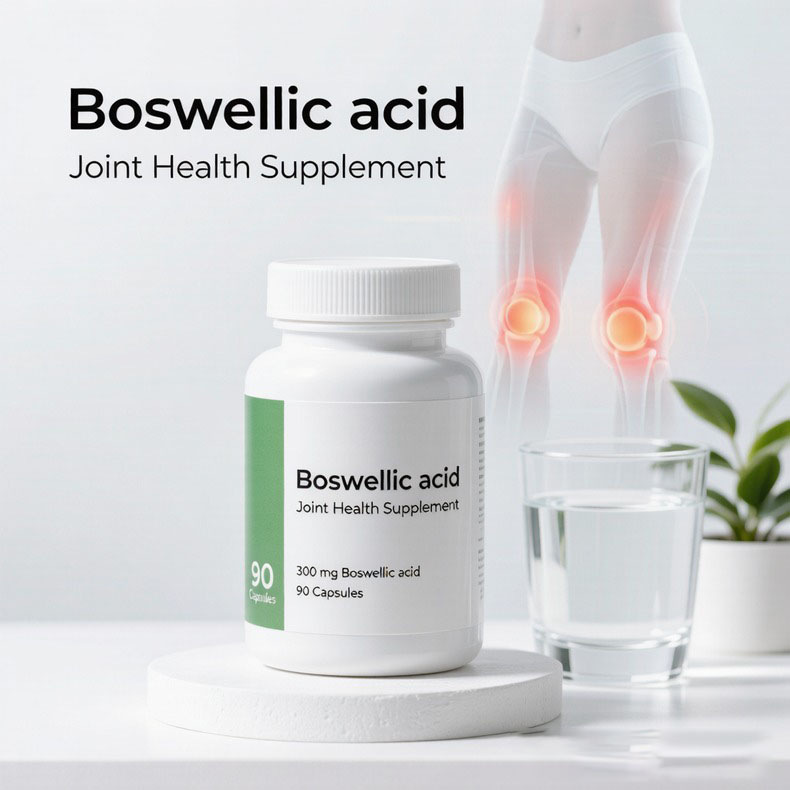
Premium Boswellic Acid Natural 5-Lipoxygenase Inhibitor Joint Health & Anti-Inflammatory Solution
Product Introduction
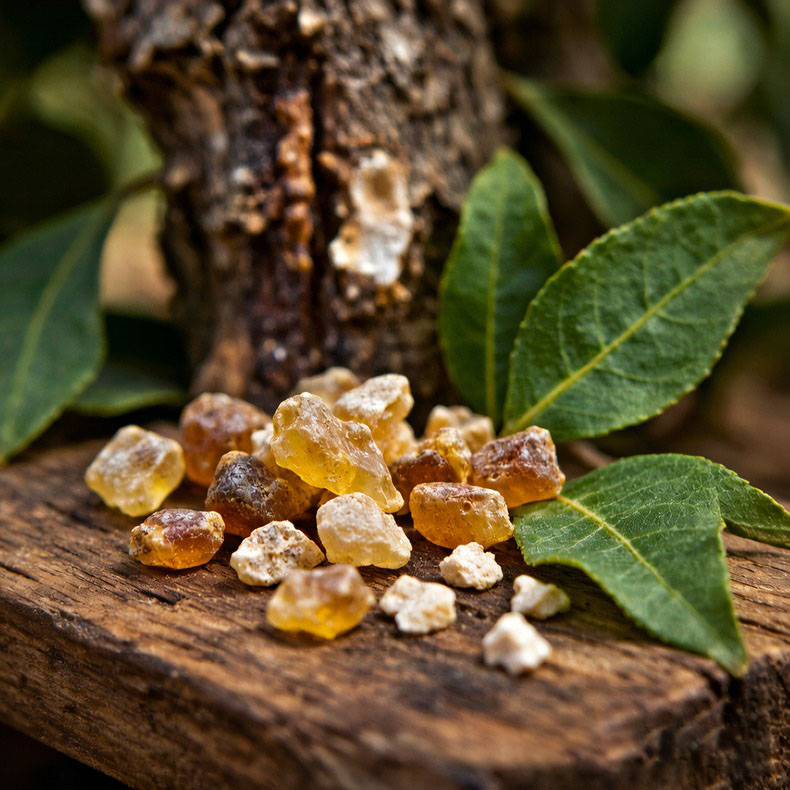
Boswellic acid is a naturally occurring pentacyclic triterpenoid compound derived from the oleo-gum resin of Boswellia serrata (Indian frankincense) and other Boswellia species. With the CAS registry number 631-69-6, β-Boswellic acid represents one of the most extensively studied bioactive constituents within the Boswellia genus, recognized primarily for its potent and selective 5-lipoxygenase (5-LOX) inhibitory activity.
Physicochemical Properties
| Property | Value |
| CAS Number | 631-69-6 |
| Molecular Formula | C₃₀H₄₈O₃ |
| Molecular Weight | 456.71 g/mol |
| Appearance | White crystalline powder |
| Melting Point | 220–222 °C |
| Density (Predicted) | 1.10 ± 0.1 g/cm³ |
| Refractive Index (Predicted) | n20/D 1.56 |
| Solubility | Soluble in CHCl₃, MeOH, EtOAc; Insoluble in H₂O |
| pKa (Predicted) | 4.64 ± 0.60 |
| MDL Number | MFCD04039448 |
| PubChem CID | 46783539 |
Applications
Joint & Musculoskeletal Health
The most established application of boswellic acid is in the management of osteoarthritis and other degenerative joint conditions. Through combined 5-LOX inhibition, NF-κB suppression, and MMP downregulation, boswellic acids provide:
- Clinically significant pain reduction (VAS: −45% to −62% at 90 days)
- Improved joint function and mobility (WOMAC function: −69% to −74%)
- Reduced morning stiffness (WOMAC stiffness: −66% to −69%)
- Potential disease-modifying effects through cartilage preservation (radiographic evidence)
- NSAID-sparing effects, enabling reduced reliance on conventional analgesics
Gastrointestinal Health
Unlike NSAIDs that cause gastric erosion through COX-1 inhibition, boswellic acids exert gastroprotective effects:
- Reduction in inflammatory bowel disease activity (CDAI improvement in Crohn’s disease)
- Gastric mucosal protection via PGE₂ preservation and antioxidant activity
- Prevention of ethanol-induced gastric ulcers in preclinical models (α-BA 50–200 mg/kg)
- Favorable GI tolerability confirmed across all clinical trials
Respiratory Health
- Improvement in pulmonary function parameters (FEV₁, FVC, PEFR) in bronchial asthma
- Reduction in leukotriene-mediated bronchoconstriction via 5-LOX inhibition
- Potential adjunctive therapy for allergic airway inflammation
FAQ
Q1: What is the difference between β-Boswellic Acid (CAS 631-69-6) and AKBA?
A: β-Boswellic acid (CAS 631-69-6) is the parent pentacyclic triterpenoid with a hydroxyl group at position C-3. AKBA (3-Acetyl-11-keto-β-boswellic acid, CAS 67416-61-9) is a derivative with an additional acetyl group at C-3 and a keto group at C-11. AKBA is the most potent 5-LOX inhibitor in the boswellic acid family (IC₅₀ = 1.5 μM), while β-BA contributes to the full-spectrum synergistic anti-inflammatory effect. Both compounds are valuable, and the optimal product depends on your formulation objectives.
Q2: How does boswellic acid compare with curcumin for joint health?
A: According to the 2025 Nutrients network meta-analysis (39 RCTs, 4,599 patients), boswellic acid ranked #1 for WOMAC pain reduction, while curcumin ranked #2. Boswellic acid was the ONLY supplement to achieve statistically significant improvement in WOMAC stiffness. Clinically, the two compounds are complementary: boswellic acid targets 5-LOX → leukotriene pathway, while curcumin primarily modulates NF-κB and COX-2. Many advanced joint health formulations now combine both for multi-pathway synergy.
Q3: What is the recommended daily dosage of boswellic acid?
A: Based on clinical evidence from the Boswellin® Super trial (2024): 300–600 mg/day of standardized Boswellia serrata extract (≥ 30% AKBA, 50–55% total boswellic acids), administered as 150–300 mg twice daily with meals. For standard 65% boswellic acid extract, typical dosing is 500–1,000 mg/day. Onset of clinical effect is typically observed within 5–30 days, with sustained improvement over 90 days of continuous use.
Q4: Is boswellic acid safe for long-term use?
A: Yes. Clinical trials lasting up to 12 months have demonstrated a favorable safety profile with adverse events limited to mild, transient gastrointestinal symptoms occurring at rates comparable to placebo. No serious adverse events attributable to Boswellia extract have been reported. Unlike NSAIDs, boswellic acid does not cause gastric mucosal damage, making it suitable for long-term use in chronic inflammatory conditions.
Q5: Does boswellic acid interact with prescription medications?
A: No clinically significant drug interactions have been reported. Theoretical considerations include: (a) CYP3A4 — boswellic acids are substrates of CYP3A4, so potent CYP3A4 inhibitors or inducers may theoretically affect plasma levels, though clinical significance is unconfirmed; (b) Anti-platelet effects — mild in vitro anti-platelet activity has been observed; caution with concomitant anticoagulants is theoretically prudent. Always advise customers to consult their healthcare provider.
Q6: Can boswellic acid be combined with glucosamine and chondroitin?
A: Yes. Boswellic acid, glucosamine, and chondroitin act through complementary mechanisms — boswellic acid provides anti-inflammatory and 5-LOX inhibitory effects, while glucosamine/chondroitin provide substrate support for cartilage matrix synthesis. This multi-modal approach is increasingly popular in premium joint health formulations, though clinical trials of the specific triple combination are limited.