Glabridin CAS:59870-68-7
Product Specifications
| Item | Detail |
|---|---|
| Synonyms | Glabridin; (±)-Glabridin; 2-(4-Hydroxybenzyl)-5-(γ,γ-dimethylallyl)-4-methoxy-resorcinol isoflavan |
| CAS RN | 59870-68-7 [(±)-racemate, natural]; 94336-08-0 [single enantiomer, lit.] |
| Molecular Formula | C₂₀H₂₀O₄ |
| MW | 324.37 |
| Botanical | Glycyrrhiza glabraL., Fabaceae ("light licorice", Gansu/Xinjiang origin premium) |
| HS Code (ref) | 1302 / 2938 |
| Sibling (same root) | Dipotassium Glycyrrhizinate (Licorice Acid Dipotassium) — triterpene saponin, separate CAS |
| Related peaks (HPLC) | Glabrene, Isoglubridin (control in Glabridin-grade extract) |
Product Description
Glabridin CAS 59870-68-7 Isoflavan Phenol from Glycyrrhiza glabra
Product Identification
Description
Glabridin is the signature brightening phenol of licorice root — an isoflavan with a prenyl + methoxy-resorcinol motif, responsible for the bulk of G. glabra's "even skin tone / post-UV pigmentation" signal in cosmetic literature. Structurally unrelated to licorice acid (triterpene saponin) despite same plant — different extraction, different use-case, different price tier.
Four commercial buckets:
- Cosmetic Brightening (DTC+brand biggest): "Glabridin serum / cream" positioned as "hydroquinone alternative — licorice root traditional brightening" — EU/US cannot use >1% HQ in cosmetic (banned in EU full, US Rx 2% Rx-only), so "licorice Glabridin" is the clean-beauty brightening actives pillar (alongside tranexamic, kojic, alpha-arbutin, vitamin C). Typical formula: Glabridin 40% P.E. at 0.5%–2% in serum (= 2–40 mg pure glabridin / 100 g serum). Search: "Glabridin serum", "licorice root brightening", "hydroquinone alternative natural"
- Licorice P.E. B2B (10% / 20% / 40% HPLC): 40% is the "gold standard" cosmetic grade (tan to light brown powder, G. glabraroot CO₂ or ethanol extract, standardized); 10–20% are entry/blend grades (often with other brightening actives — kojic, arbutin, tranexamic). B2B procurement: "Glabridin 40% licorice extract Gansu origin"
- Anti-glycation & Antioxidant (formulation R&D): Glabridin shows AGE-formation inhibition & ROS-scavenging in skin-aging lit — positions alongside Licorice Acid Dipotassium (soothing) + Lupeol/OA/UA triterpenes (barrier/anti-aging) in "licorice + triterpene" anti-glycation cluster. Inner-link to Taima's Lupeol 545-47-1 & Licorice Acid Dipotassium pages.
- R&D / Reference: ≥98% HPLC for licorice extract QC (Glabridin + Glabrene + Licorice Acid method split), premium cosmetic mono-active.
Applications
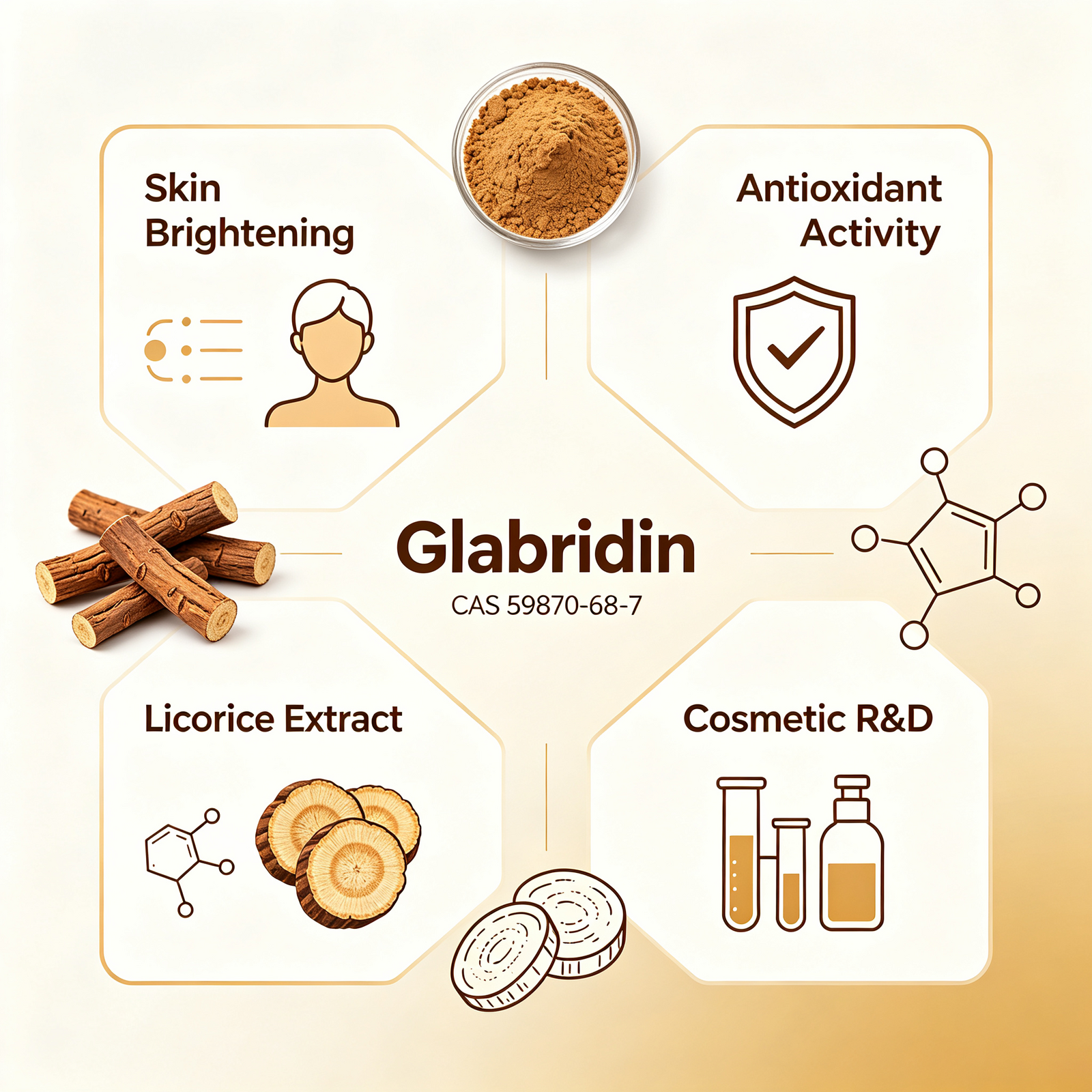
Cosmetic Brightening – Glabridin 40% P.E. (0.5%–2% in serum/cream) or pure 98%+ (premium mono); "hydroquinone alternative" positioning (search phrase only, not on-label); often blended Licorice Acid Dipotassium + Tranexamic + Vitamin C + Kojic in KR/JP brightening formulas
Licorice P.E. B2B – 10% / 20% / 40% Glabridin HPLC, G. glabraroot CO₂/ethanol; Gansu/Xinjiang origin premium; blended brightening stacks (kojic, alpha-arbutin, niacinamide)
Anti-glycation & Anti-aging – AGE-inhibition lit; "licorice + triterpene" cluster (Licorice Acid Dipotassium + Lupeol/OA/UA); inner-link to Taima's Licorice Acid & Lupeol pages
Soothing Adjuvant – Glabridin has mild anti-inflammatory / UVB-protection lit alongside Licorice Acid's stronger signal; "brightening + soothing" dual (vs. pure brightening actives that irritate — Glabridin's selling point vs. HQ/kojic)
Reference Standard (≥98%) – for licorice extract QC (Glabridin + Glabrene + Licorice Acid split HPLC)
Request a Quote or Free Sample
Xi'an Taima supplies this product worldwide with full COA, MSDS, and technical documentation. Contact our team for pricing and sample requests.
Contact Our Team →