
Xanthophyll (Lutein) CAS 127-40-2 | Marigold Extract, Eye Health & Feed Pigment
Product Identification
| Item | Detail |
|---|---|
| Synonyms | Xanthophyll; Lutein; (3R,3′R,6′R)-β,ε-Carotene-3,3′-diol; alpha-Carotene-3,3′-diol |
| CAS RN | 127-40-2 |
| EINECS | 204-840-0 |
| Molecular Formula | C₄₀H₅₆O₂ |
| MW | 568.87 |
| FEMA / E-Number | E161b (xanthophylls, food color group) |
| HS Code (ref) | 3203 / 2932 (carotenoid extracts) |
Description
Xanthophyll (lutein) is a lipophilic oxycarotenoid with a conjugated polyene chain (λmax ~446 nm in ethanol), responsible for yellow–orange pigmentation in plants and animals. It is the dominant carotenoid in the human macular pigment, together with zeaxanthin, and is widely studied for blue-light filtration, antioxidant activity, and age-related macular degeneration (AMD) risk reduction.
Commercially, xanthophyll / lutein sits across four market segments:
- Nutraceutical – softgels, gummies, eye-health formulas
- Food & Beverage – natural colorant (E161b group), bakery, dairy, beverages
- Animal Feed – egg-yolk and broiler-skin pigmentation; aquaculture
- Pharmaceutical / R&D – reference standard, ophthalmic research
Applications
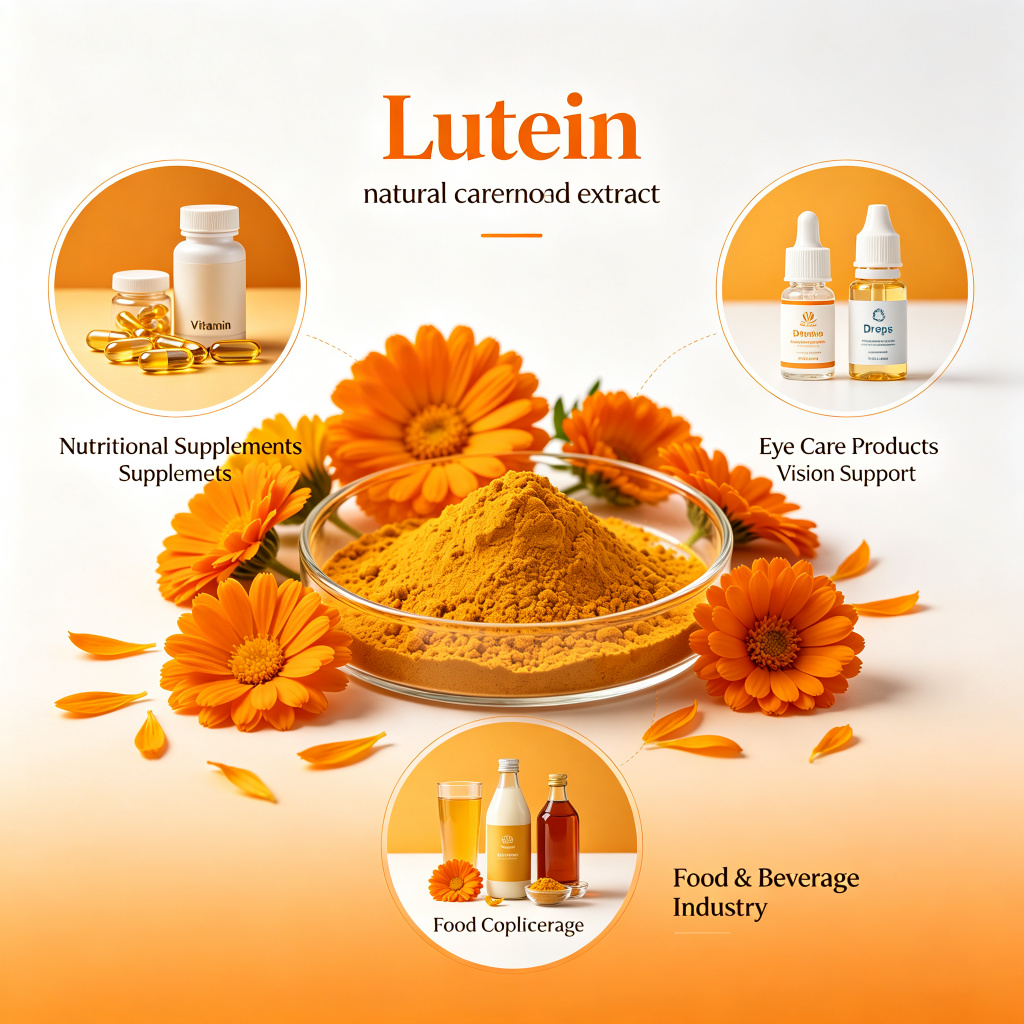
Eye-health nutraceuticals – macular pigment enhancement, AMD & cataract support, often combined with zeaxanthin / meso-zeaxanthin / omega-3
Natural food colorant (E161b) – bakery, confectionery, dairy, functional beverages; oil-dispersible and water-dispersible formats available via encapsulation
Poultry & aquaculture feed – intensifies egg-yolk and fish flesh pigmentation; compliant with FAO/WHO feed additive practice
Cosmetics & skin care – antioxidant, blue-light protection claims (emerging segment)
Reference standard / R&D – HPLC quantification, stability & formulation studies